

Insects
& Animals
Khao Sok National Park
Fascinating
Pyrops Candelaria
Discover the Hidden Treasures of
Khao Sok National Park!
Venture into the heart of Khao Sok, a natural paradise where the diverse wildlife awaits.
This ancient rainforest is home to countless species of insects and animals, including the rare Rafflesia flower, exotic hornbills, and playful gibbons. As you trek through lush trails, be enchanted by the vibrant colors of butterflies, the calls of tropical birds, and the sight of wild elephants roaming freely. Perfect for nature enthusiasts and adventure seekers, Khao Sok promises an unforgettable journey into one of Thailand's most pristine ecosystems.

Great Argus (Argusianus argus) in Khao Sok National Park
The Great Argus is one of the most striking birds in Southeast Asia due to its impressive size and extravagant plumage. Males are known for their long tail feathers, which can reach up to 1.7 meters in length, and intricate eye-like patterns on their secondary wing feathers.

Lizards: The Masters of Camouflage in the Tropical Forest
Lizards found in Khao Sok National Park exhibit a remarkable diversity of species. This area is part of a tropical rainforest, providing an ideal environment for reptiles. Below is interesting information about the lizards that can be found within Khao Sok National Park:


Oriental Bay Owl
belonging to the order Strigiformes, are fascinating nocturnal birds of prey found in various habitats, including the dense forests of Khao Sok National Park. Known for their distinctive round faces, large forward-facing eyes, and silent flight, owls are highly adapted to hunting in low-light conditions.

The mantis, or praying mantis
belongs to the order Mantodea. It is easily recognizable by its elongated body, triangular head, and prominent, raptorial forelegs that are adapted for capturing and holding prey. These insects are highly skilled predators, often known for their stealthy hunting techniques.



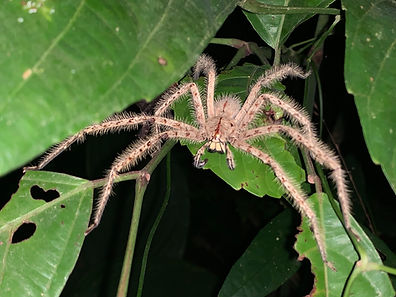
Heteropoda davidbowie
Is a fascinating and well-known spider species named after the famous musician David Bowie. This spider was discovered in the rainforests of Southeast Asia, including Thailand. Although Heteropoda davidbowie is rare and difficult to spot in the rainforests of Khao Sok National Park, it serves as an excellent example of the rich biodiversity found in the area.


Red-eyed Tree Frog (Agalychnis callidryas)
The Red-eyed Tree Frog (Agalychnis callidryas) is one of the most striking and unique tree frogs in the world. If you're a nature enthusiast and love adventure, a night trek in Khao Sok National Park to search for this fascinating frog will be an experience you won't want to miss.


Witness the Majestic Gaur at Cheow Lan Lake
Discover the untamed beauty of Khao Sok with our exclusive wildlife tours! Embark on an unforgettable journey to Cheow Lan Lake, where you can encounter the magnificent gaur, one of the most impressive wild animals in Thailand. Known for their powerful build, striking black-brown coat, and majestic horns, these creatures roam freely in the lush forests surrounding the lake.


Tapir of Khao Sok
This image was captured by a wildlife camera trap set up by patrol officers at Khao Sok National Park. The camera captured a tapir near a water source and food area for wildlife in the region.
What animal has a face like a pig, feet like a rhino, a nose like an elephant’s trunk, and a short tail like a bear?

Flying Lizards in Khao Sok National Park
Khao Sok National Park is a treasure trove of biodiversity, home to a fascinating array of wildlife, including the remarkable flying lizards. These unique reptiles, known scientifically as Draco, are a wonder of the animal kingdom, captivating visitors with their extraordinary ability to glide between trees.


Spectacled Langur in Khao Sok Forest
The Spectacled Langur, or Dusky Leaf Monkey (Trachypithecus obscurus), is one of the most enchanting primates found in the lush rainforests of Southeast Asia. These gentle and shy monkeys are particularly notable for their striking facial markings, which resemble spectacles—hence their name.

