
Cheow Lan Lake and Forest Fragmentation
KHLONG SAENG · CONSERVATION SCIENCE
Cheow Lan Lake and Forest Fragmentation
When the Cheow Lan reservoir flooded forested valleys, former hilltops became isolated islands. Long-term research found rapid restructuring and later severe local loss of small-mammal communities on these fragments, making the reservoir an important case study in tropical forest fragmentation.
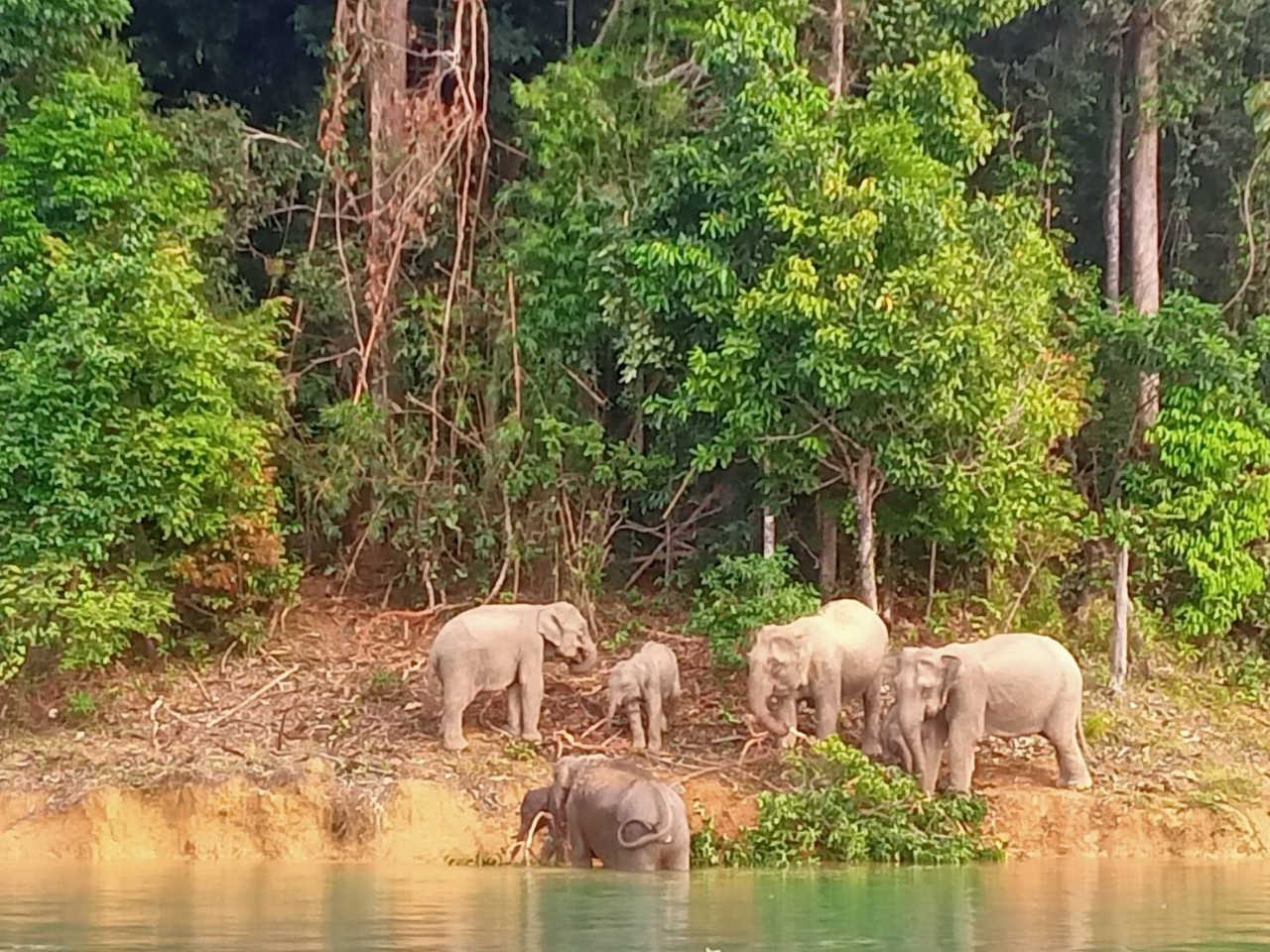
Forested islands across Cheow Lan Lake illustrate how reservoir creation divided parts of a formerly connected rainforest landscape.
A New Archipelago Inside a Rainforest
Scientific work describes the reservoir as inundating about 165 square kilometres of lowland monsoon evergreen forest in 1987. Forest remaining on higher ground became land-bridge islands of very different sizes.
The First Years After Isolation
Small mammals were surveyed on 12 reservoir islands from 1992 to 1994, roughly five to seven years after fragmentation. Researchers found that island communities rapidly became impoverished subsets of those in continuous forest, with altered species distributions and abundances.
Twenty-Five Years Later
A later conservation synthesis reported near-complete local extinction of the studied small-mammal fauna on reservoir islands over approximately 25 years. The work became a powerful warning about the vulnerability of small isolated tropical forest fragments.
Why Connected Forest Matters
Large connected landscapes allow animals to move between feeding, breeding and refuge areas and support ecological processes that small fragments cannot replicate. Khlong Saeng's extensive mainland forest is therefore more than a scenic backdrop; connectivity is central to its conservation value.
Beauty and Ecological Cost Can Coexist
Acknowledging ecological history does not require dismissing the lake's beauty. A mature travel guide can hold both truths: Cheow Lan is an extraordinary landscape for visitors, and its creation also produced measurable ecological disruption.
What Responsible Tourism Can Learn
Visitors cannot reverse the reservoir's history, but tourism can avoid adding unnecessary pressure. Quiet wildlife observation, respect for protected zones, responsible waste management and support for conservation-minded operators all matter.
KEY FACTS
GOOD TO KNOW
Reservoir formation: 1987 in cited scientific literature | Lowland forest inundated in fragmentation study: about 165 km² | Early island study: 1992–1994 | Long-term lesson: small isolated fragments lost much of their original small-mammal fauna
Fragmentation results from specific island studies should not be generalised to every species or every part of the wider forest.
Frequently Asked Questions
Were Cheow Lan's islands once connected forest?
Many reservoir islands are former higher ground left isolated when forested valleys were inundated.
How much forest did the study say was flooded?
A peer-reviewed fragmentation study describes about 165 square kilometres of lowland monsoon evergreen forest being inundated by the reservoir.
What happened to small mammals on the islands?
Researchers found rapid changes in the first years after isolation, and later work reported near-complete local loss of the studied small-mammal fauna over about 25 years.
Does this mean there is no wildlife on the islands?
No. The findings concern particular studied communities and islands. They demonstrate severe fragmentation effects but should not be simplified into a claim that all wildlife disappeared.
Why is mainland forest important?
Large connected forest supports movement, resources and ecological processes that small isolated fragments cannot provide.